Techniques
Refraction Microtremor (ReMi)
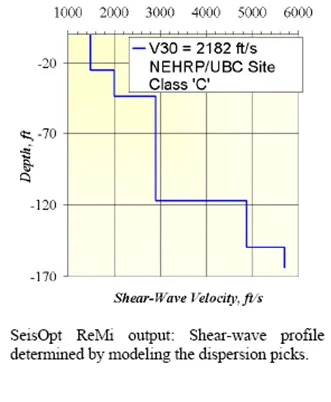
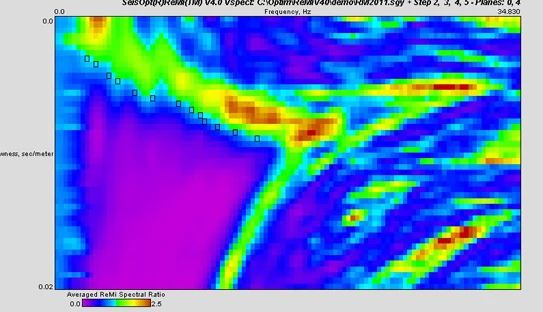
For the first time in India, PARSAN has also launched innovative technique of ReMi (Refraction Micro-tremor) having distinct edge over MASW and SASW in terms of logistics, execution and results. ReMi can be performed under the same layout as used for seismic refraction, to obtain excellent shear wave velocity profiles of subsurface.
ReMi is a new, proven seismic method for measuring in-situ shear-wave (S-wave) velocity profiles. It is economic both in terms of cost and time.
Methodology
How a ReMi survey is carried out
Testing is performed at the surface using the same conventional seismograph and vertical P-wave geophones are used for refraction studies. Depending on the material properties of the subsurface, ReMi can determine shear wave velocities down to a minimum of 40 meters (130 feet) and a maximum of 100 meters (300 feet) depth.
Because ReMi uses only ambient noise as a seismic source, ongoing activities such as traffic and construction work act as seismic sources. A ReMi survey usually takes less than two hours, from setup through breakdown.
Applications
ReMi can be used to obtain Vs profiles for:
- Earthquake site response
- Liquefaction analysis
- Mapping the subsurface and estimating the strength of subsurface materials
- Finding buried cultural features, such as dumps and piers
- Offshore surveys to determine depth to bedrock for harbor and pier extensions
Key Benefits
The ReMi method offers significant advantages. In contrast to borehole measurements, ReMi tests a much larger volume of the subsurface. The results represent the average shear wave velocity over distances as far as 200 meters (600 feet). Because ReMi is non-invasive and non-destructive, and uses only ambient noise as a seismic source, no permits are required for its use. ReMi seismic lines can be deployed within road medians, at active construction sites, or along highways, without having to disturb work or traffic flow. Unlike other seismic methods for determining shear wave velocity, ReMi will use these ongoing activities as seismic sources. There is no need to close a street or shut down work for the purpose of data acquisition and a ReMi survey usually takes less than two hours, from setup through breakdown. These advantages sum to substantial savings in time and cost. Moreover the method provides more accurate results compared to conventional effort of picking up shear waves from records which more often than not lead to errors.