Techniques
Electrical Resistivity Imaging
2D Resistivity electrical resistivity imaging India uses an array of electrodes (typically 60) connected by multicore cable to provide a linear depth profile, or pseudo-section, of the variation in resistivity, both, along the survey line and with depth. Switching of the current and potential electrode pairs is done using electrical resistivity imaging system. The spacing between the electrodes is fixed initially and then increased intending to greater depth of investigation.
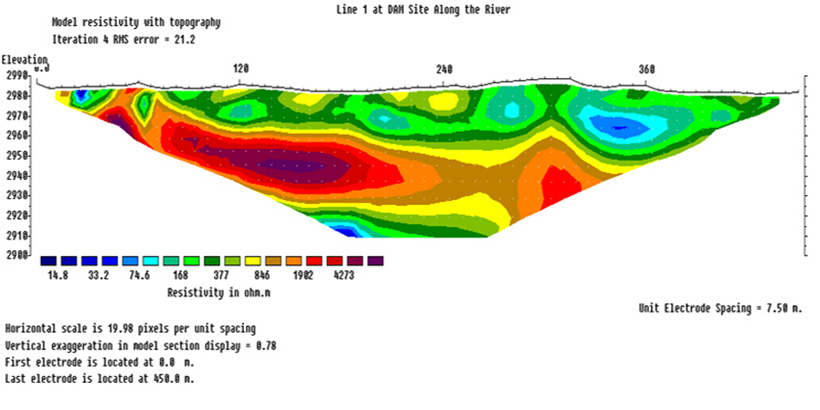
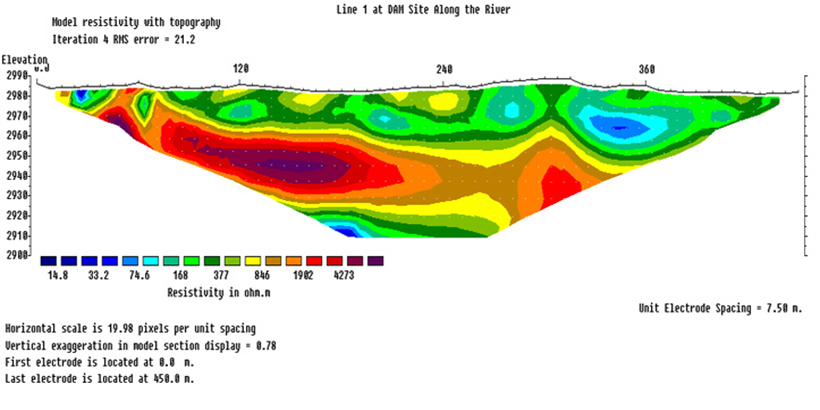
The ERI technique is distinctly useful for investigation of critical sites to get information about weak zones or buried channels under the rock interface, which goes undetected in seismic refraction as it terminates at the rock interface. Resistivity imaging can also be effectively used to determine rock profile along dam axis across high current shallow rivers where deployment of hydrophones is not possible, hence restricting the use of seismic refraction. For deep penetration, seismic refraction technique requires use of explosives, which are not always feasible to deploy especially in sensitive areas. In such cases resistivity imaging can be effectively used to get detailed information of deeper layers.
| Applications | Advantages |
|---|---|
| Determine the underground water resource | Excellent 2D display of ground resistivity |
| Bedrock quality and depth measurements | Delineation of small features like cavity, contamination plumes, weak zones in structures like dams etc. |
| Mineral prospecting | |
| Dam structure analysis | |
| Landfill | |
| Contamination source detection |
Applications of Resistivity Imaging
The technique is extremely useful for investigations of important sites to get information on weak zones or buried channels, under the rock interface, which goes undetected in seismic refraction, which terminated at rock interface. Resistivity imaging can also be effectively used to determine rock profile along dam axis across high current shallow rivers where deployment of hydrophones is not possible restricting use of seismic refraction. For deep penetration seismic refraction techniques requires use of explosives, which are not always feasible to deploy especially in sensitive areas. In such cases resistivity imaging can be effectively used to get detailed information of deeper layers.
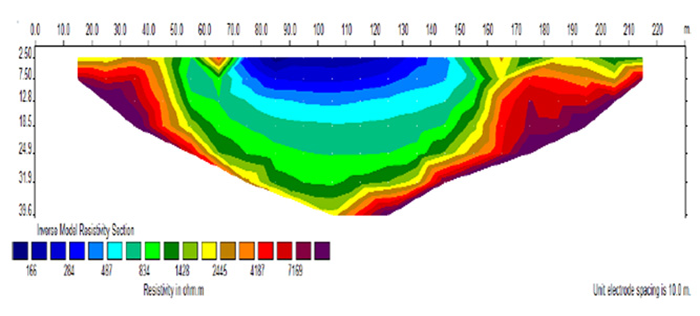
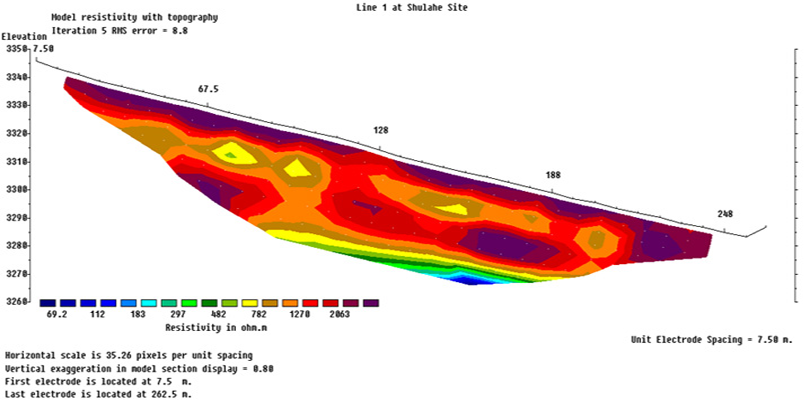
Following are examples from work of resistivity imaging carried out by PARSAN for various applications.